Overview
The Core Identity System of the Republic of Somaliland defines the official visual standards that govern how the State is represented across all Government institutions. It establishes one unified identity framework to ensure national symbols, official colors, typography, and supporting elements are applied consistently and correctly in every formal context.
This system is not decorative. It is an official national standard designed to strengthen institutional credibility, ensure public recognition, and protect the authority and dignity of State communication in both domestic and international environments.
Strategic Purpose and Objectives
The purpose of the Core Identity System is to standardize Government representation and ensure that all official materials reflect national unity, authority, and professionalism. Through a shared national framework, the Government prevents fragmented visual practices and ensures every ministry, agency, and authority communicates with one consistent State identity.
Key Objectives
- Official Recognition: Ensure all Government communications are immediately identifiable as authentic and authoritative.
- National Consistency: Eliminate conflicting designs and unify all institutions under one national system.
- Protection of State Symbols: Safeguard national elements from misuse, distortion, or unauthorized modification.
- Institutional Discipline: Promote structured communication practices aligned with Government standards.
- Public Trust and Credibility: Strengthen confidence through professional, consistent, and recognizable visual identity.
Core Principles of the System
The Core Identity System is governed by principles that apply to all official uses across Government institutions.
Unity and Consistency
All Government entities must follow one national visual standard. Consistency is essential to ensure the State communicates with one unified voice and identity.
Clear Hierarchy of Authority
National symbols represent State sovereignty and must remain visually primary. Institutional identifiers must support, not compete with, the authority of the State.
Discipline in Implementation
All official elements must be applied exactly as approved. No redesign, modification, recreation, or reinterpretation is permitted under any circumstances.
Protection of National Integrity
The system exists to protect national dignity and prevent misuse of symbols, colors, and official marks in unauthorized contexts.
Brand Structure and Identity Hierarchy
The National Brand Identity is organized into distinct levels to ensure clarity, authority, and correct representation across all Government applications.
National Sovereign Symbols
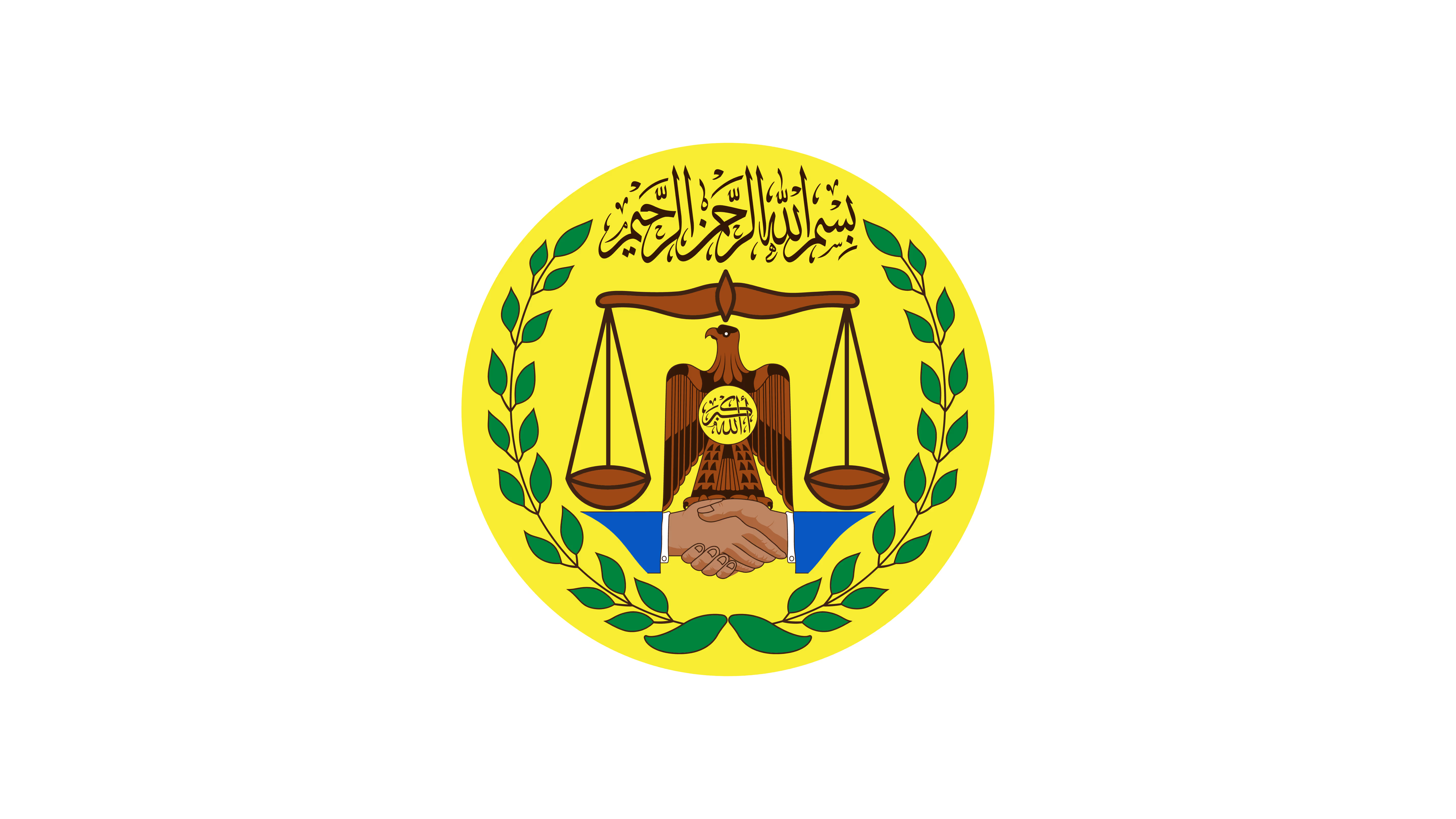
These represent the highest authority of the Republic of Somaliland and must be used only in official State contexts that reflect national sovereignty.
State-Level Identity (Presidential and Sovereign Use)
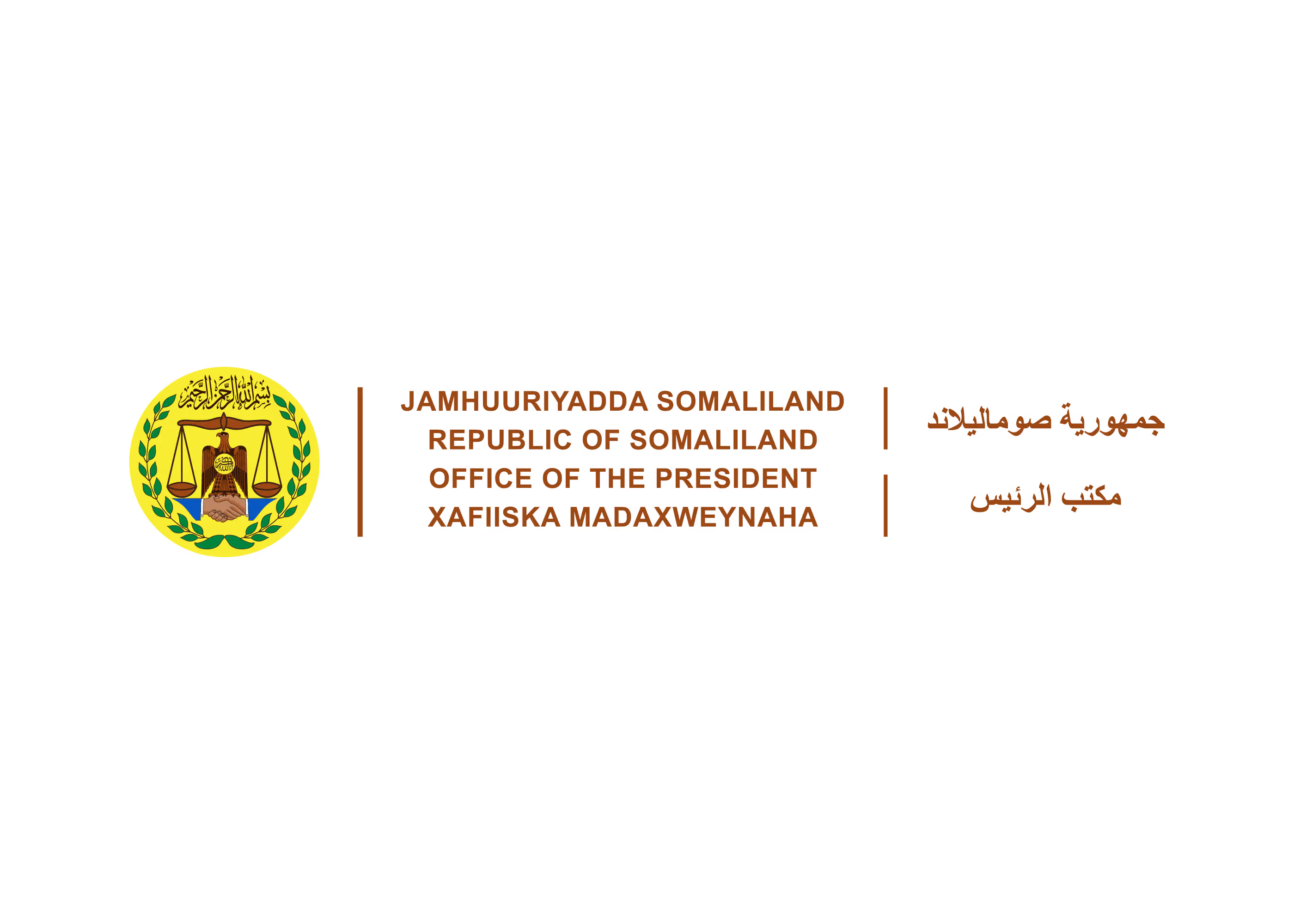
These identifiers represent the highest executive and sovereign representation of the State, including formal national and international communication. The Offices of the President and Vice-President sit at this level and carry the State color rather than the green or red entity colors.
Government Entity Logos (Ministries, Agencies, Authorities)
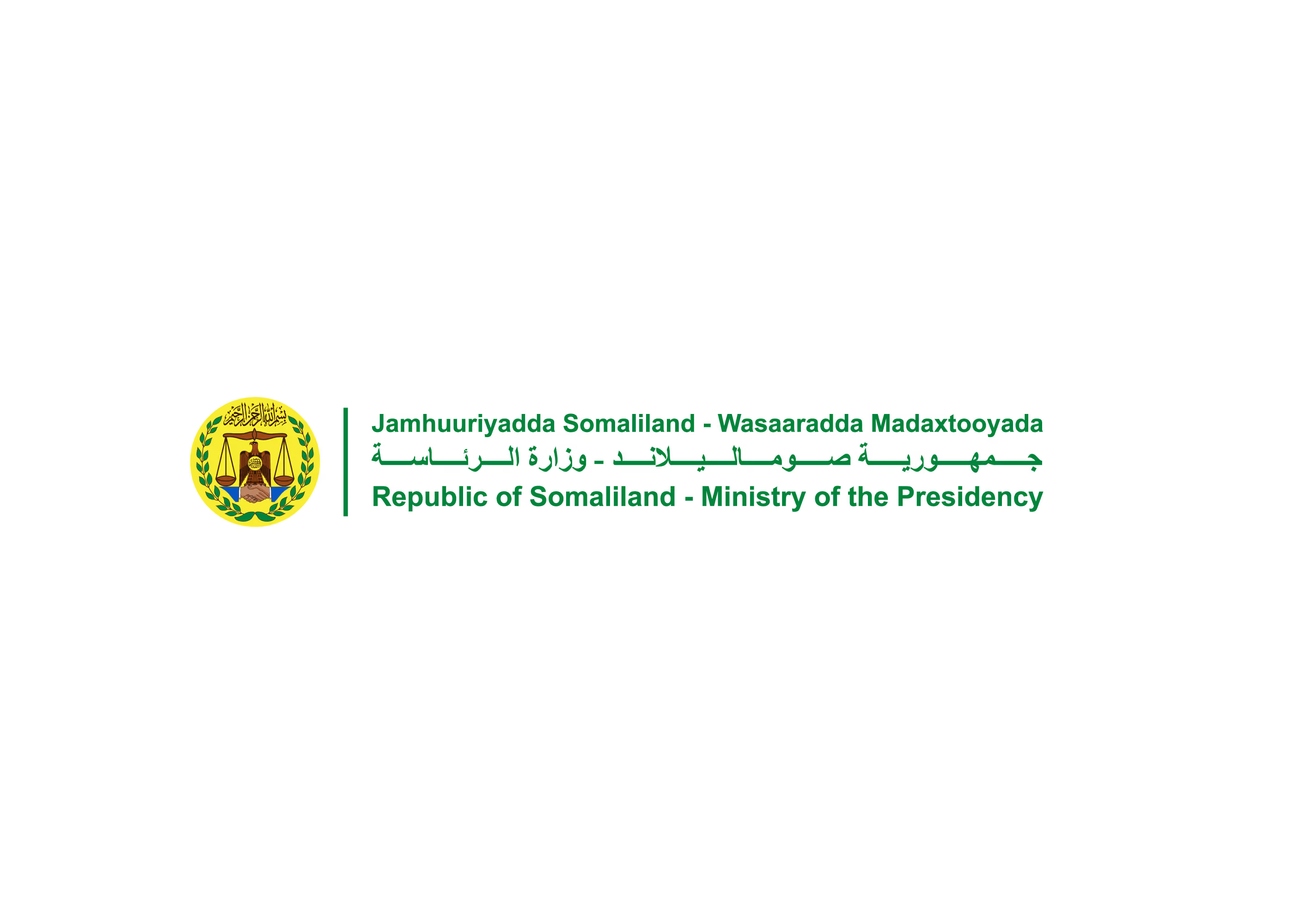
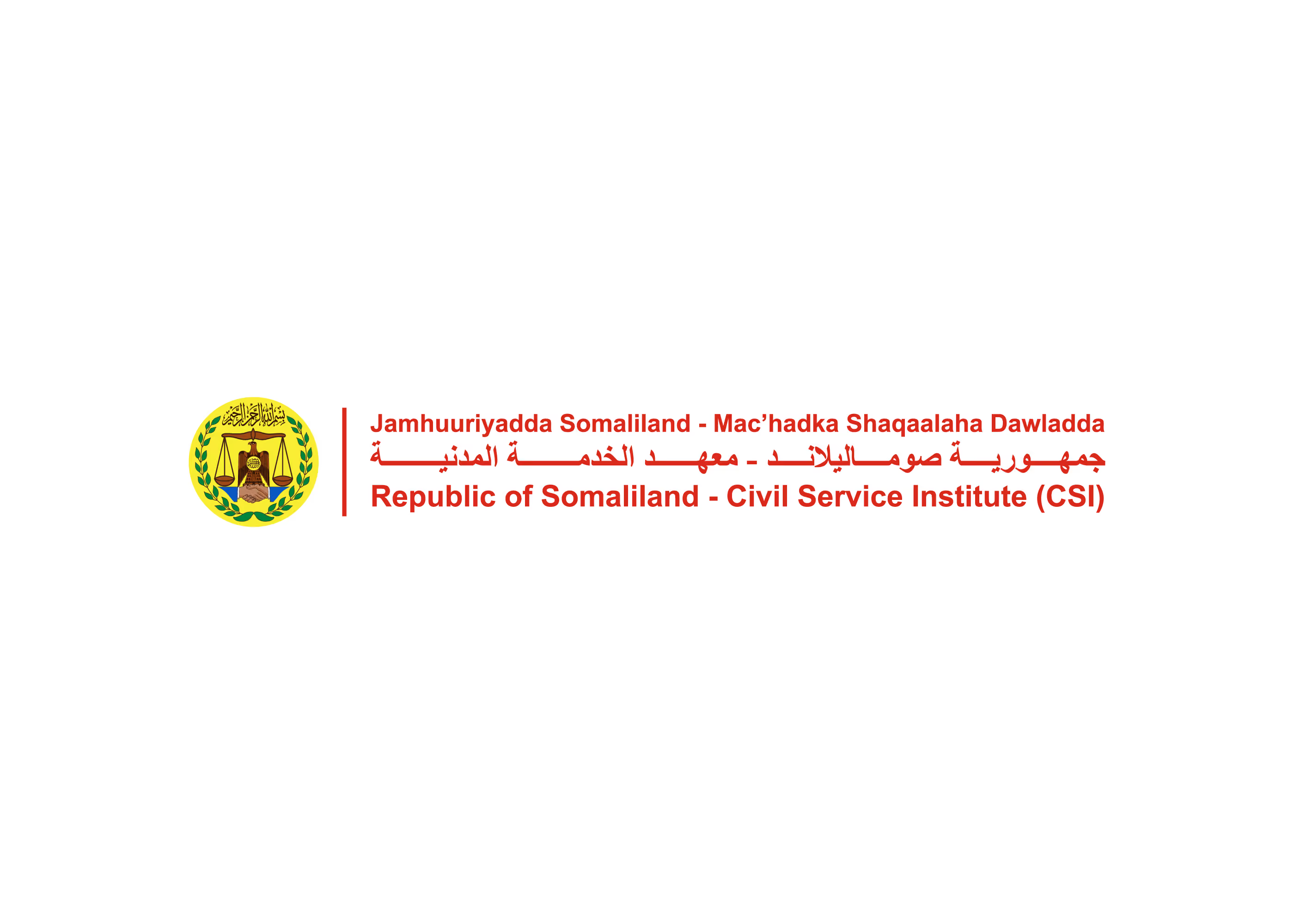
These logos identify institutional responsibilities across Government. They must remain aligned within the national system and must never override the authority of State-level identity elements.
National Color Standards
The National Color Standards define the official Government color system of the Republic of Somaliland. The system is composed of five national colors that ensure consistent and recognizable Government communication across all platforms and applications.
HEX and RGB are the authoritative specification for the Government colours. The Pantone numbers shown are nearest matches provided for print reference only — the colours were not originally specified in Pantone, and a spot colour must always be checked against the approved artwork before use. CMYK figures are process conversions and should be confirmed against the printer's own profile.
Assignment follows Article 2, corroborated by Articles 9.5 and 10.5: ministries and institutions established by the Constitution use Government Green, and all other government institutions use Government Red. The State color is reserved for the Offices of the President and Vice-President.
The Five-Color System
Primary Identity Colors (3)
These colors classify the official institution type:
- Brown — State Identity
- Green — Ministry Identity
- Red — Non-Ministerial Identity
Neutral Colors (2)
These colors support all Government materials:
- Black — Typography and contrast
- White — Background and clarity
The Five National Colors
Brown — State Standard
HEX #9D4815 · RGB 157, 72, 21 · Nearest Pantone 2021 C
Green — Ministry Standard
HEX #00843D · RGB 0, 132, 61
Red — Non-Ministerial Standard
HEX #DA291C · RGB 218, 41, 28
Neutral Colors — Black and White
Somaliland Black and White are the official neutral colors used across all Government entities. They support readability, contrast, and clean layout structure in both print and digital materials.
- Black: Primary text, headings, dividers, and functional elements
- White: Backgrounds, spacing, clarity, and content balance
Government Typography Standards
The Government Typography Standards define the official type system used across all communications of the Republic of Somaliland. Typography is not only about choosing a font—it is a national standard that ensures Government documents and public information look official, clear, and trustworthy.
When typography is applied correctly, citizens can easily recognize Government materials, read them comfortably, and understand them without confusion. Consistent typography also strengthens institutional credibility and supports a unified national identity across ministries, agencies, and authorities.
Typography System Structure
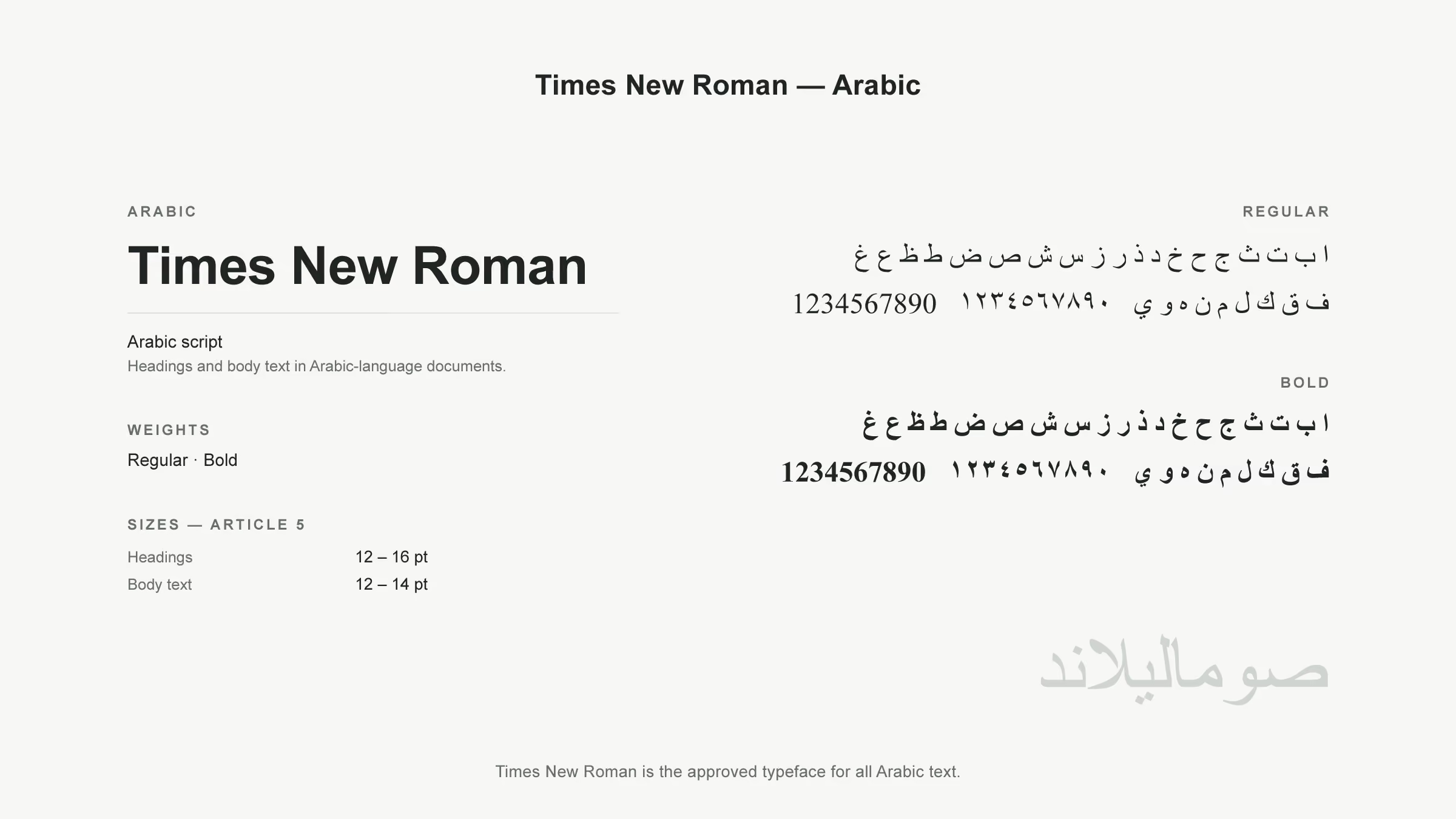
The Government typography system is built on three approved typefaces, one for each role. Article 5 of the Government Brand Guidelines assigns them: Arial for Latin headings, Garamond for Latin body text, and Times New Roman for all Arabic text. All three are in use across the Government and none is a substitute for another. Arial and Times New Roman are installed on every standard computer; Garamond may need to be obtained, and no other typeface may be used in its place.
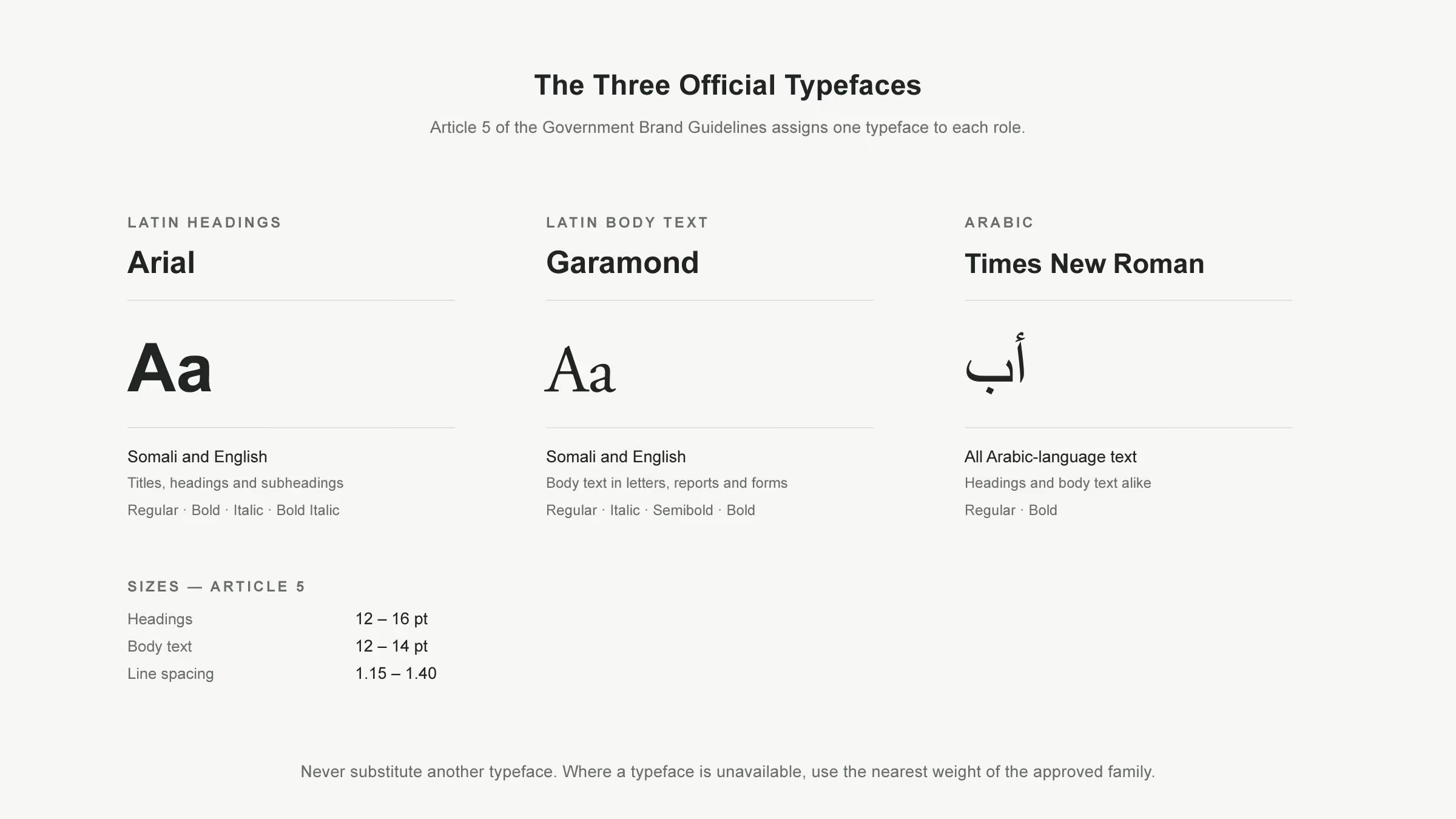
Latin Script — Somali and English
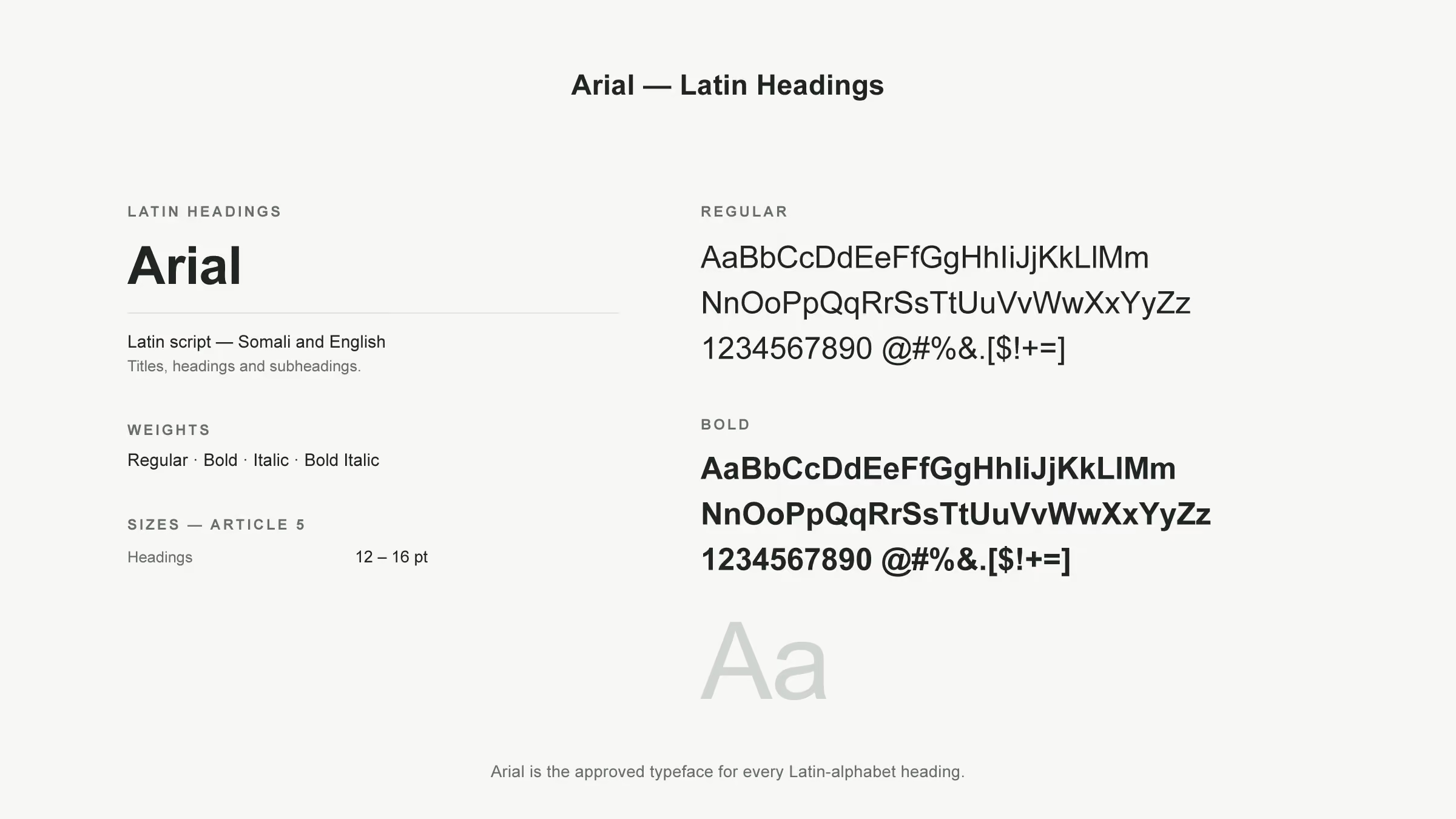
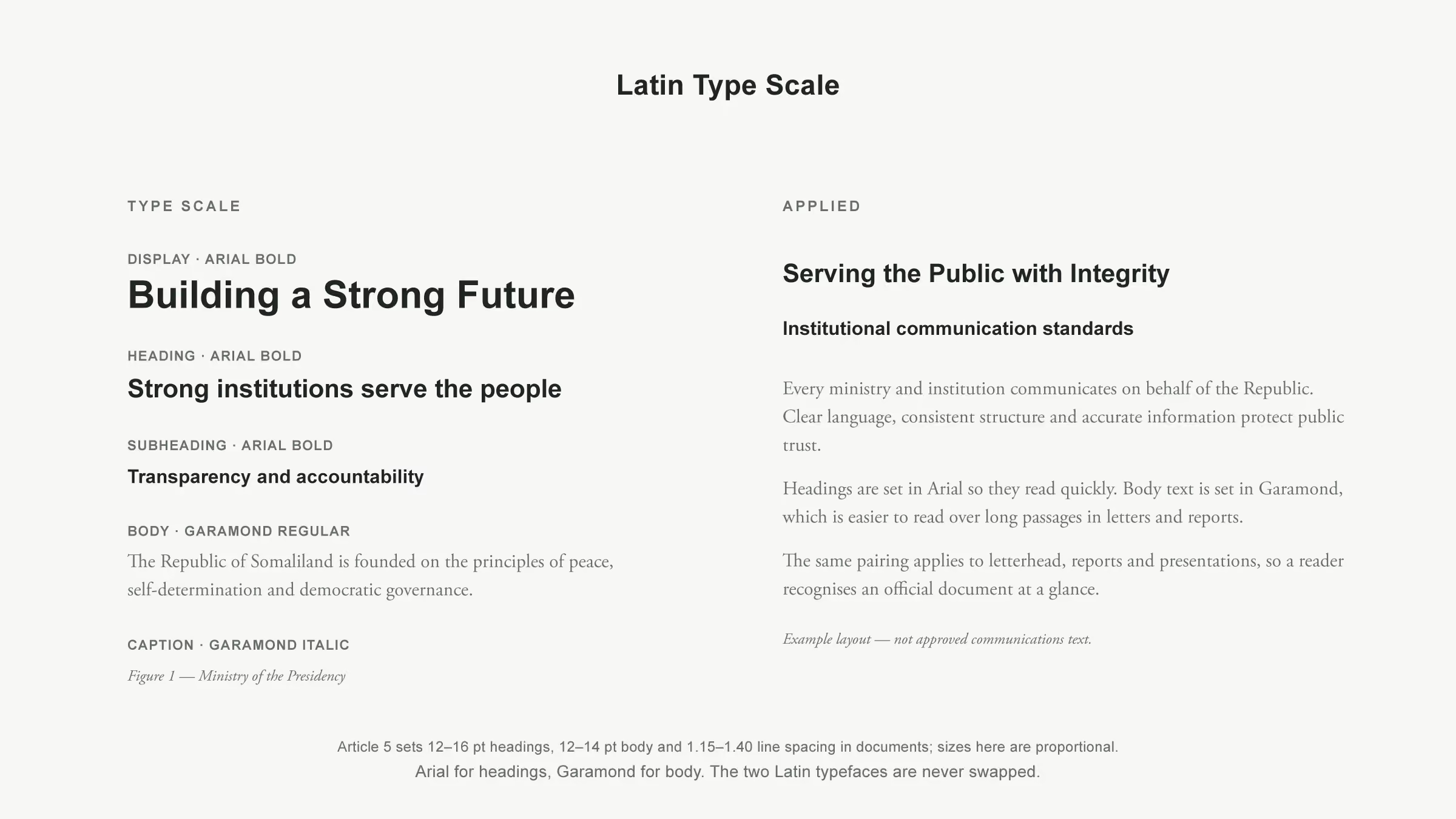
Arial is the approved typeface for every Latin-alphabet heading — titles, headings and subheadings, in both Somali and English. Approved weights are Regular, Bold, Italic and Bold Italic, and headings are set between 12 and 16 pt. Because Arial is present on every standard computer, an institution can meet the standard without licensing or installing a font.
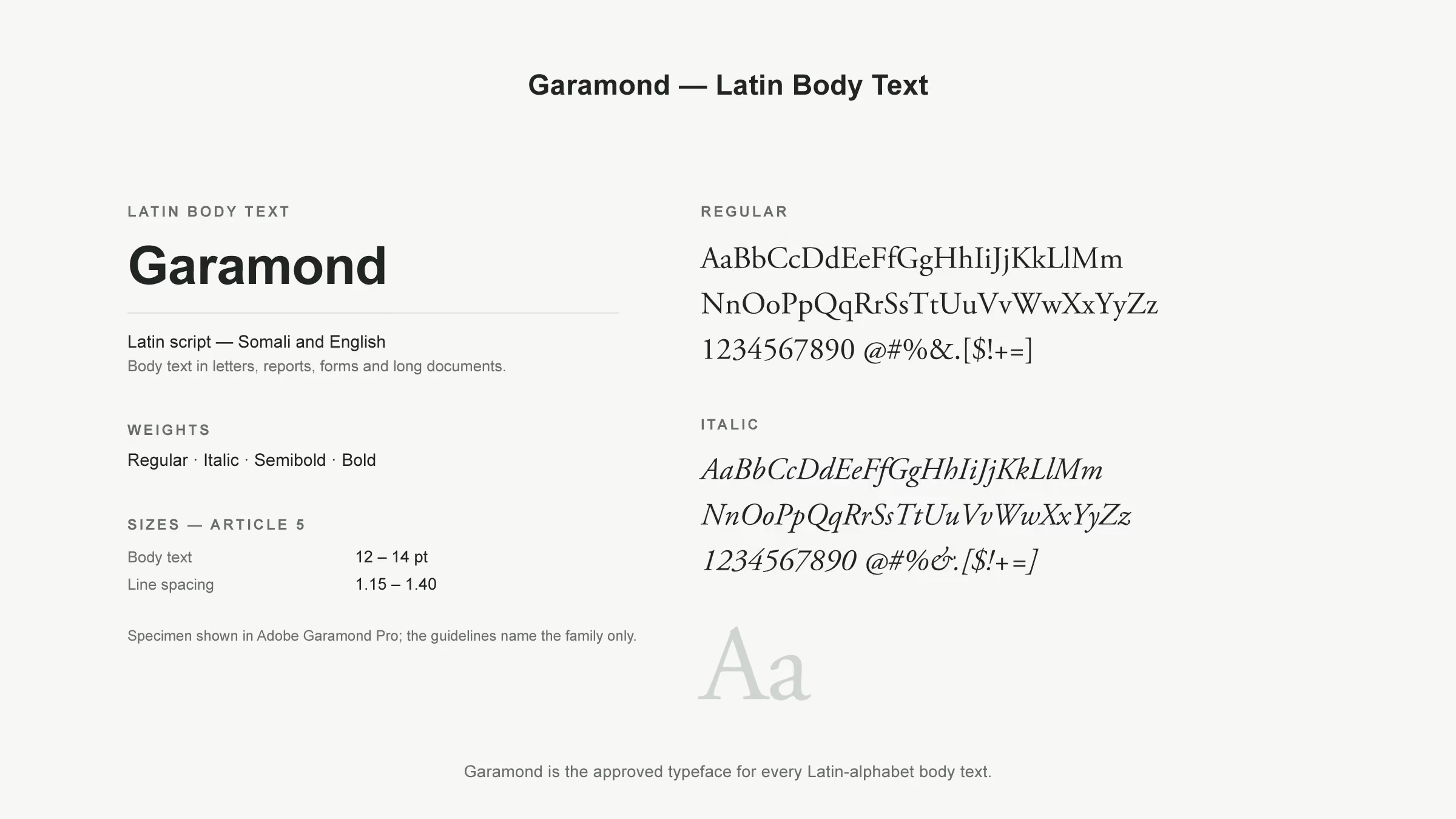
Garamond is the approved typeface for all Latin-alphabet body text — letters, reports, forms and long documents. Approved weights are Regular, Italic, Semibold and Bold, with body text set between 12 and 14 pt and line spacing between 1.15 and 1.40. Arial and Garamond are never swapped: headings are set in Arial so they read quickly, while Garamond is easier to read over long passages. Article 5 names the Garamond family only. Several different Garamonds exist, the specimen shown here is Adobe Garamond Pro, and the official cut has not yet been designated.
Arabic Script
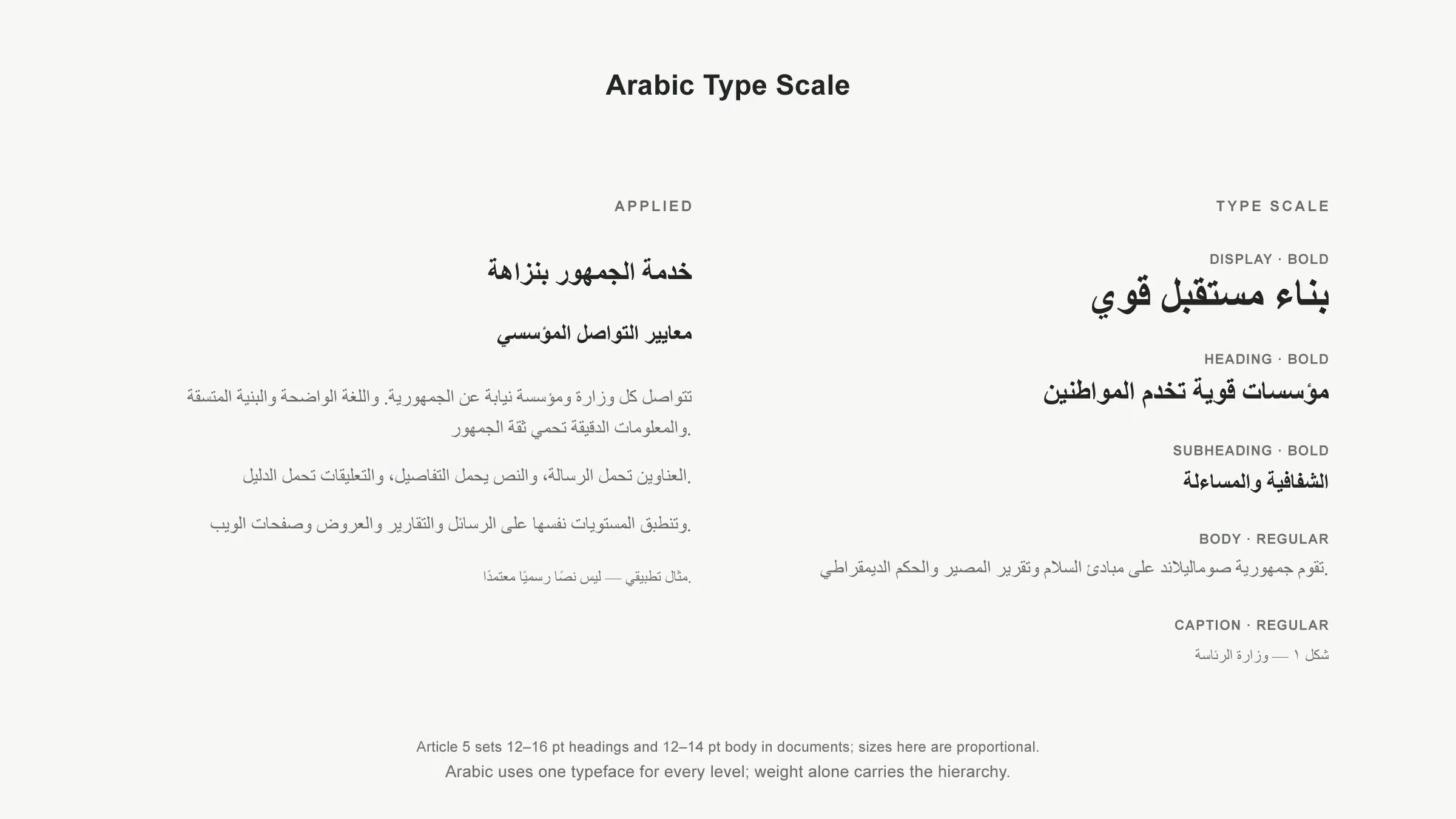
Times New Roman is the approved typeface for all Arabic text — headings and body alike. Approved weights are Regular and Bold, with headings set 12 to 16 pt and body text 12 to 14 pt. Arabic uses a single typeface at every level, so weight alone carries the hierarchy.
National Pattern System
The National Pattern is an official supporting element of the Republic of Somaliland identity system. It is used to enhance Government materials by adding national character and visual structure — especially in areas where additional background support is needed.
The pattern must always remain subtle, secondary, and non-dominant. It must never replace or compete with the National Emblem, official logos, or official text.

Where the Pattern Should Be Used
The pattern is recommended for official Government applications such as:
- Report covers, notebooks, and publications
- Certificate and folder backgrounds
- Letterhead backside and envelope interiors
- Business card backside and supporting stationery surfaces
- Website background sections (light watermark use)
Pattern Rules (Important)
To keep the identity official and consistent:
- Use only the approved national pattern artwork.
- Keep the pattern light and subtle so it does not reduce readability.
- Do not stretch, rotate, redraw, or modify the pattern.
- Do not place the pattern behind the National Emblem, logos, or dense text.
- Do not overuse the pattern across every layout.
Iconography Standards
Iconography supports Government communication by making information easier to understand and navigate, especially across digital platforms, forms, and public service materials. Icons help users recognize services and actions quickly while keeping layouts clean and professional.
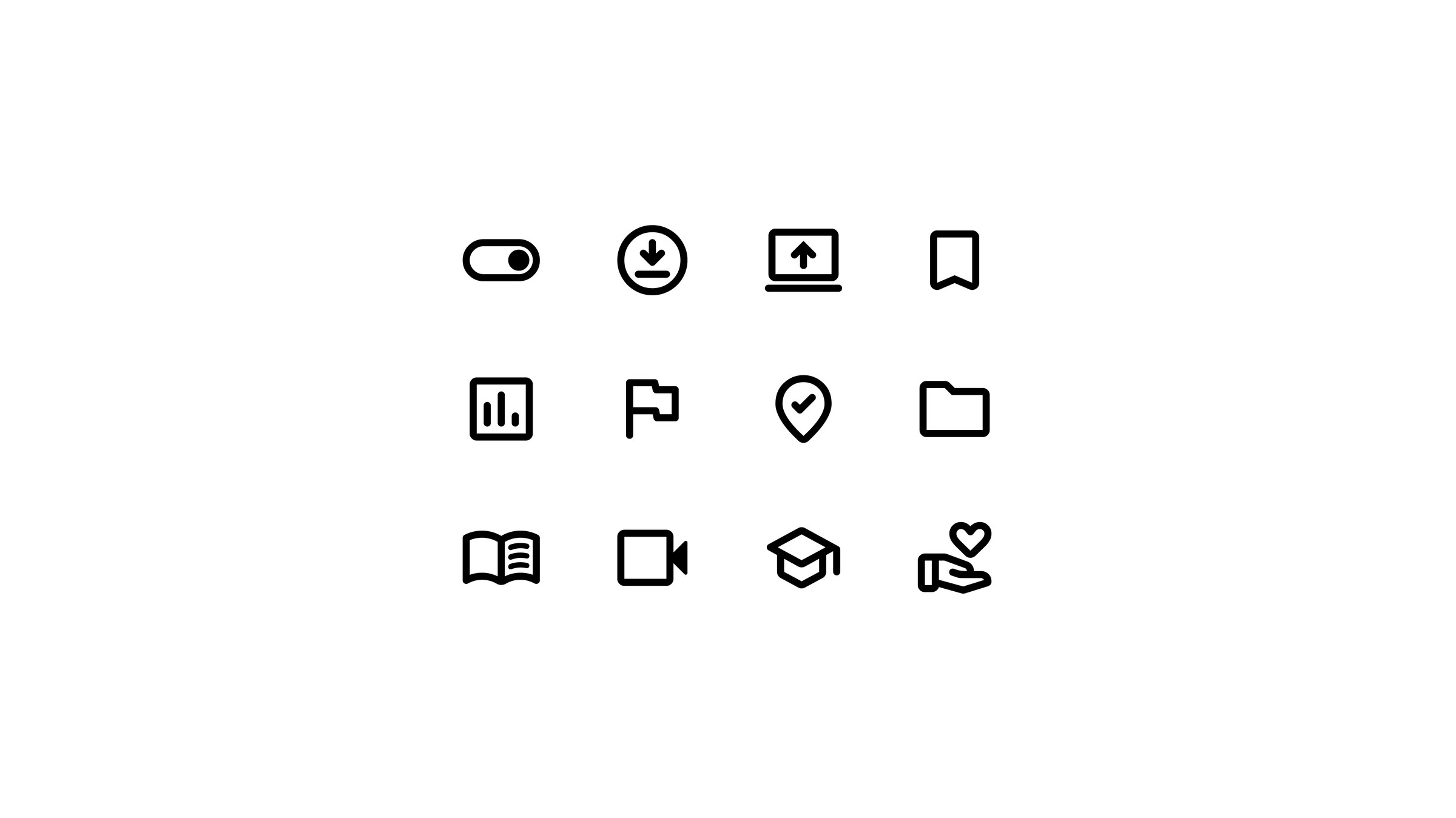
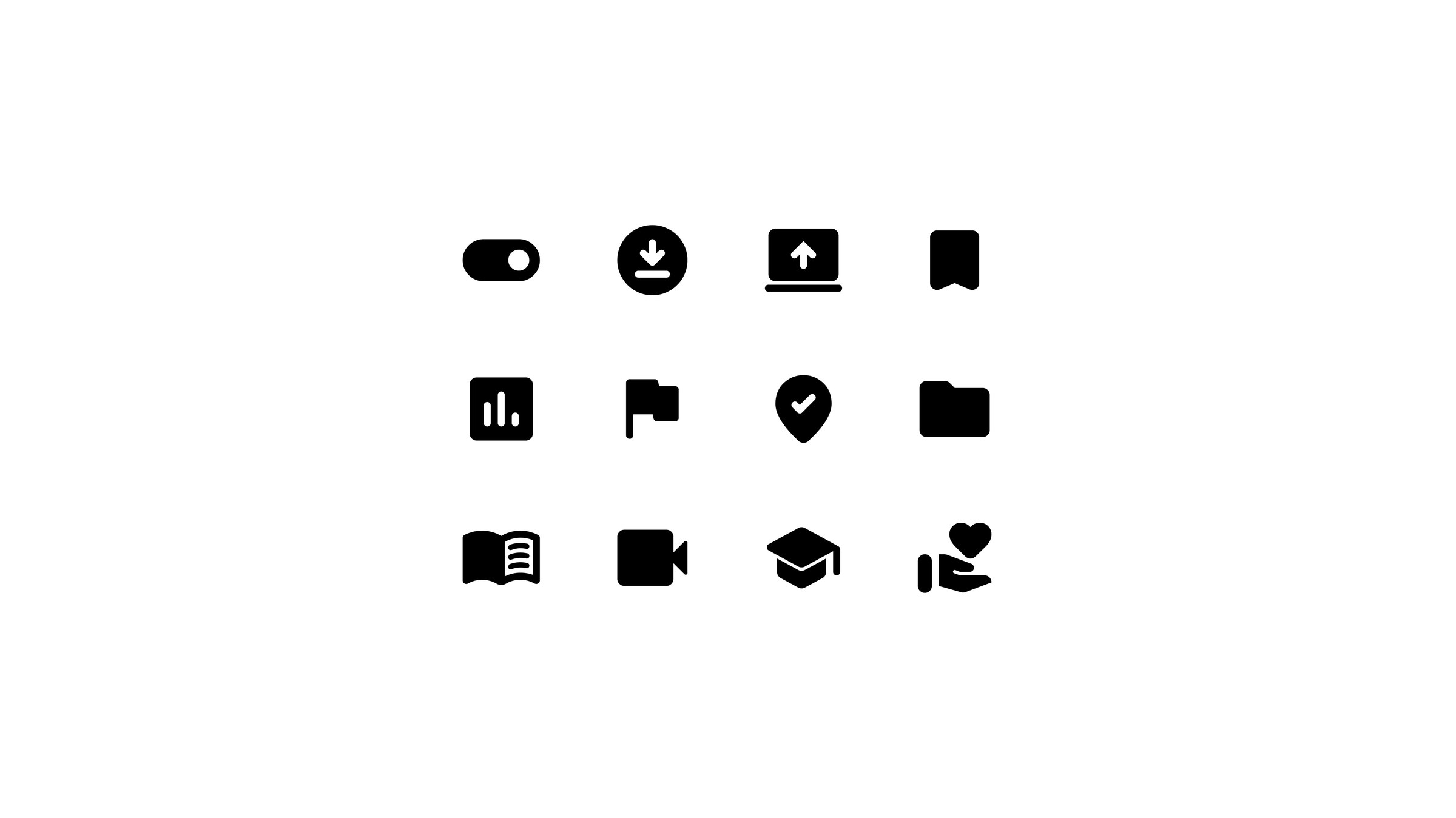
The Government icon set is based on Google Icons and is provided in two official styles to support different design needs:
- Outline Icons (Primary Style) — recommended for most Government interfaces because they are clear, modern, and consistent.
- Filled Icons (Secondary Style) — used when stronger emphasis or visibility is needed, such as active states, highlights, or important interface elements.
Icons must remain simple and consistent within the same layout and must always support the content without distracting from official identity elements.